 I finally got myself back to the garden. On Friday, I made my third visit to the Hartman Rock Garden in Springfield, OH. It took two nudges. One came from that source-of-many-things, Jim Grey’s blog. Jim makes a weekly “Recommended Reading” post that I always scan but confess to not clicking as many links in it as I used to. That’s no reflection on the quality of Jim’s recommendation but a combination of his (and his readers’) increased interest in film cameras and my decreased unallocated reading time. I clicked through on one of his July 24th recommendations and got hooked on a blog that I fully expect to quickly lead to at least one more post here along with a fuller story. I subscribed to the RSS feed which instantly brought me several recent articles, including one about a visit to the Hartman Rock Garden. That article is here. Thanks, Jim and Brandi.
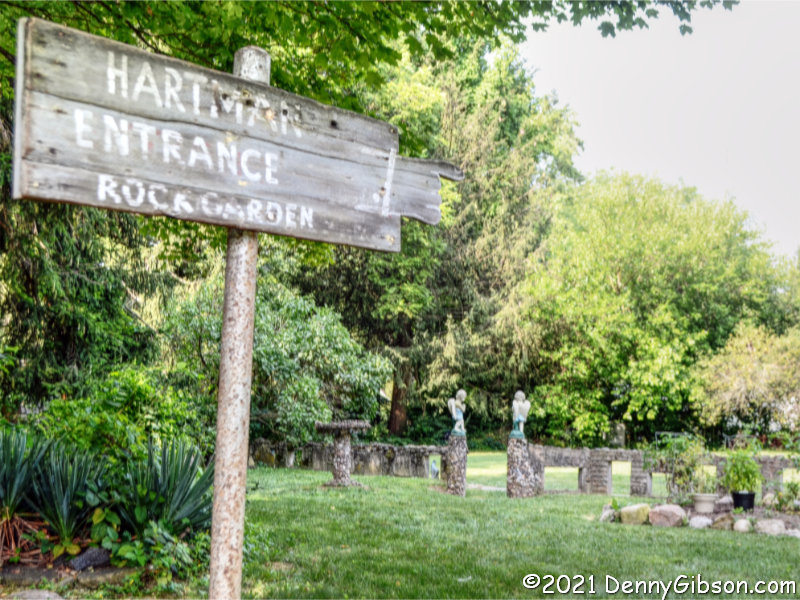 The second nudge came from an issue of Echoes, the Ohio History Connection magazine, which I had received but not yet read. Inside, a six-page article titled “Channeling a Creative Spirit” told of Ben Hartman’s creative response to finding himself jobless in the 1930s during the Great Depression. I don’t credit that pair of nudges with anything magical or supernatural but I do credit them with making me think of Springfield when an idle Friday and an open blog slot came along.
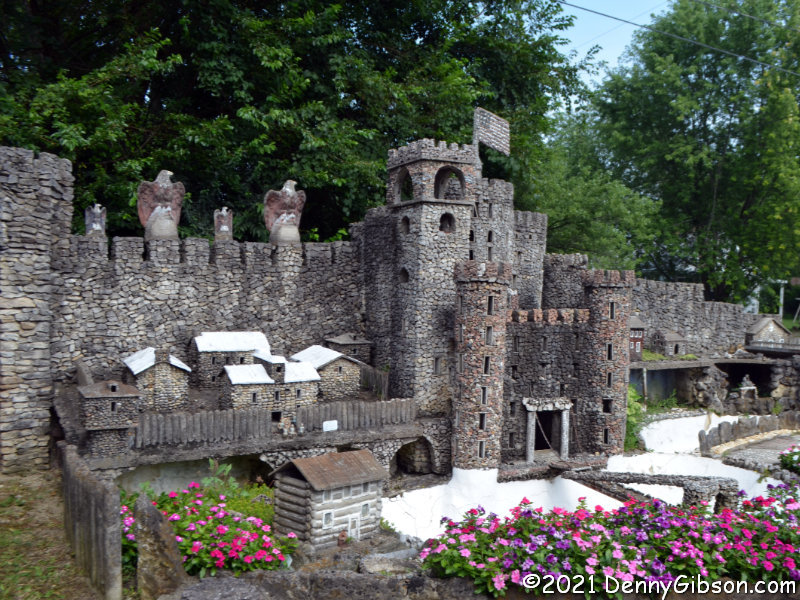
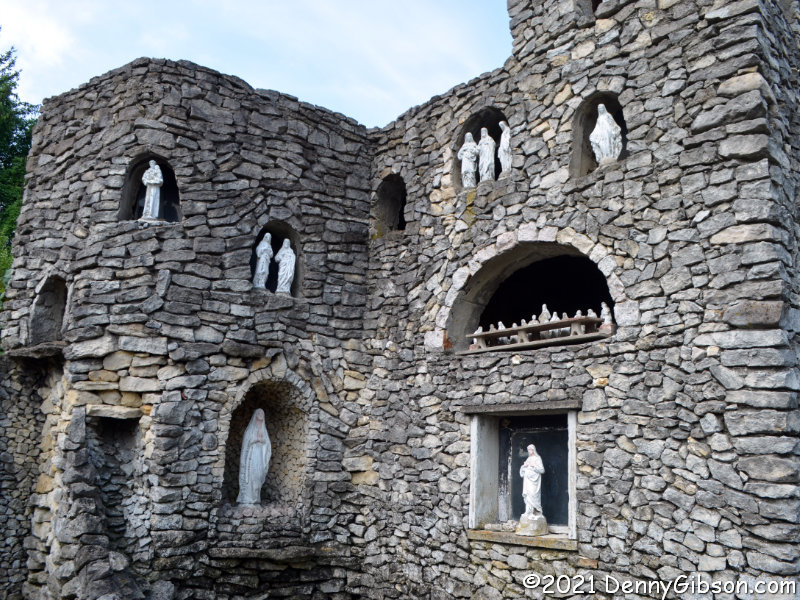
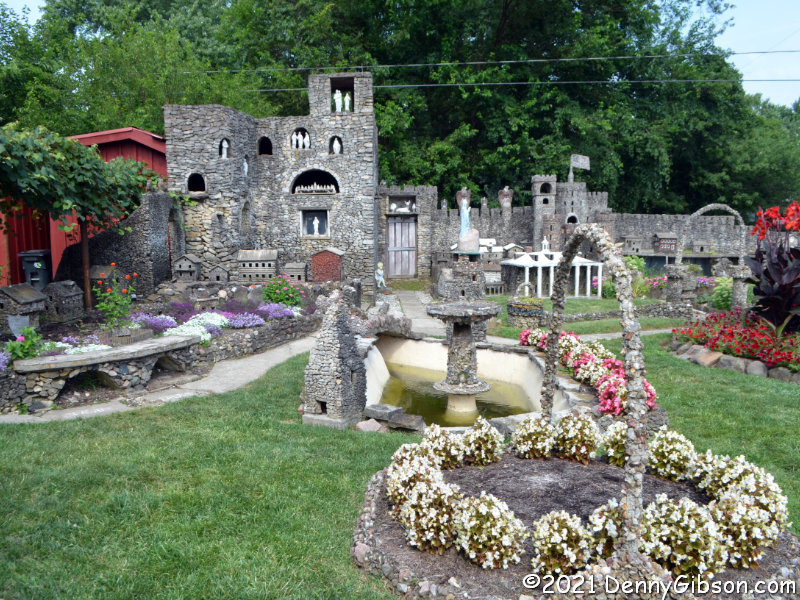 The garden started with the cement fish pond in the middle of the first photo at right. Ben was an accomplished molder at the Springfield Machine Tool Company when the depression hit. He was laid off in 1932 at age 48 and built the pond to fill his suddenly empty days. He moved on from the pond to figures and structures made of stones and other found items. Once he started building, he never stopped. His creations came in all sizes. These pictures are of some of the largest. At fourteen feet, the cathedral at the back corner is the garden’s tallest structure. A model of Da Vinci’s “The Last Supper” fills one of its many niches. The castle beside it is only a couple of feet shorter. It is believed to be based on a picture on a postcard that his wife, Mary, received.
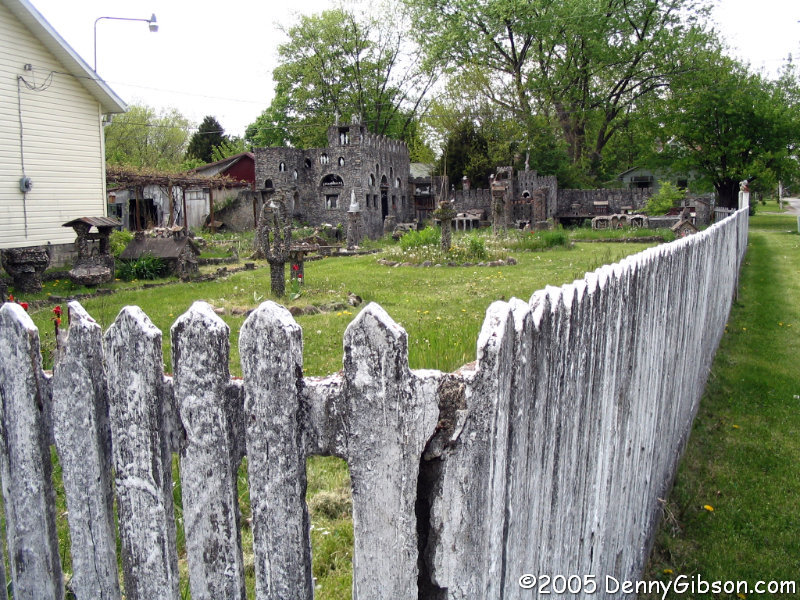 Ben returned to the foundry in 1939 but died of silicosis just five years later. Mary maintained the garden until her death in 1997. What followed was about ten years of neglect. The deterioration was nearing its peak when I made my first visit in 2005. The picture at left is from that visit. The deterioration ended just a few years later when preservation-minded Kohler Foundation purchased the property in 2008. Following restoration, ownership of the garden was transferred to Friends of the Hartman Rock Garden, and a grand reopening was celebrated in June of 2010.
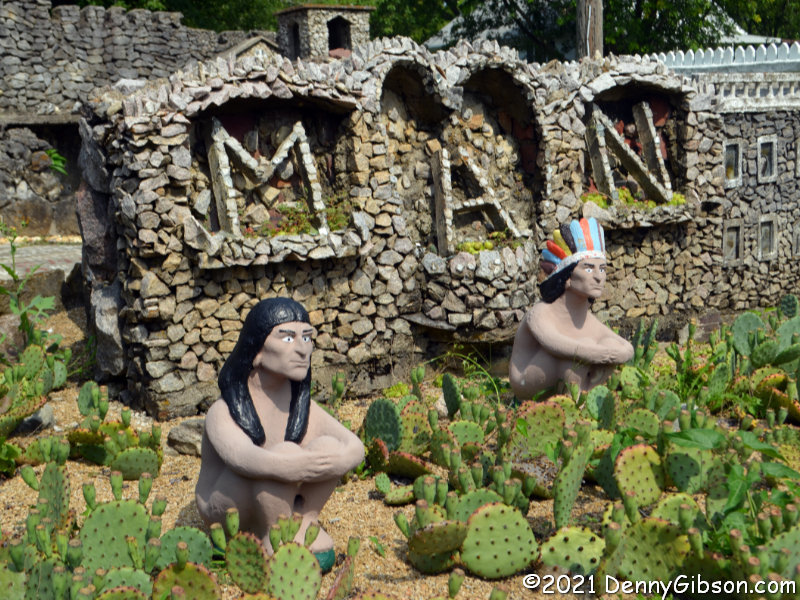
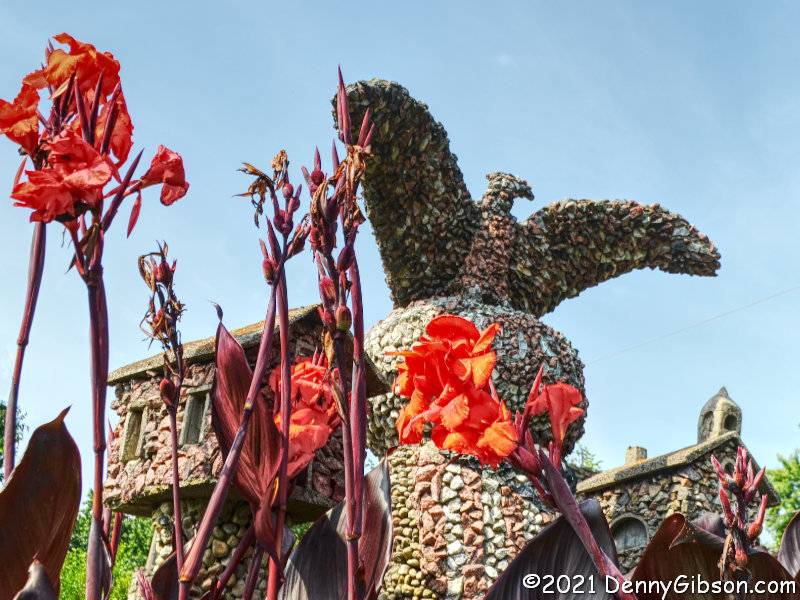
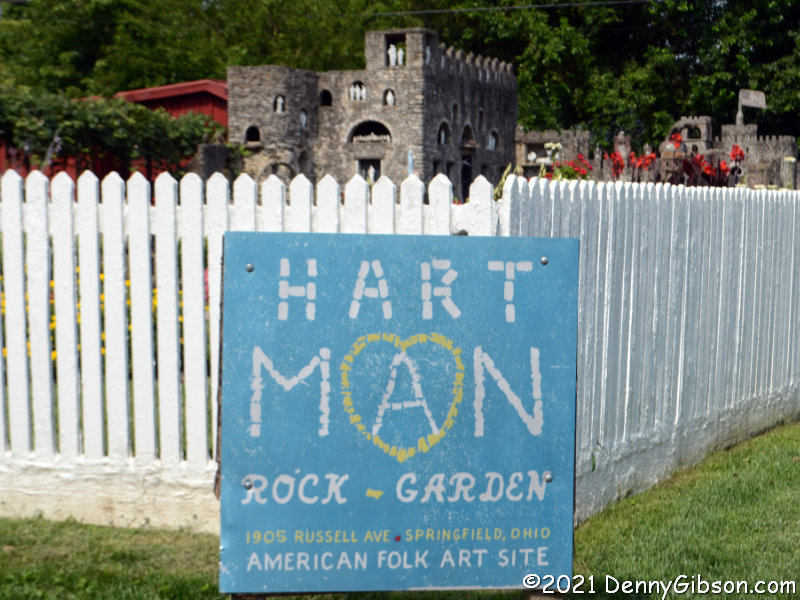
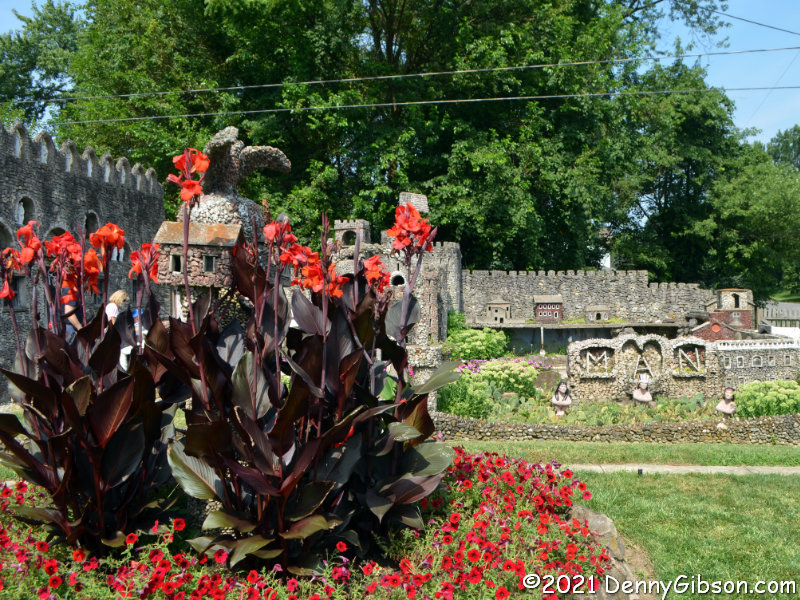 Two of the garden’s most iconic structures are the Tree of Life and the Hart(heart)MAN logo.
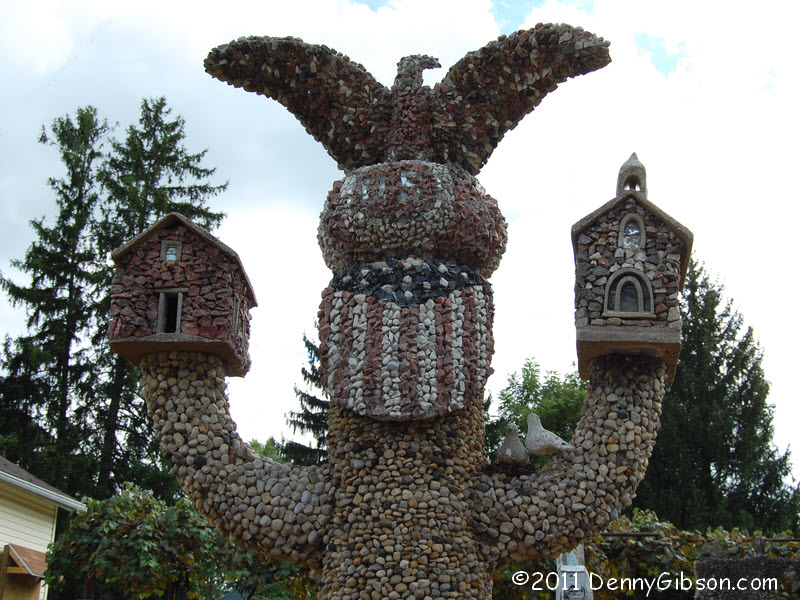 Today the Tree of Life was somewhat obscured — quite beautifully — by tall canna lilies. Here it is on my second visit in 2011. The cactus-like structure promotes the three things that Ben thought important in life. One arm holds a school and the other a church. In the center, the shield and eagle represent country. Ben estimated that this structure contains approximately 20,000 stones.
 This is probably the most underappreciated structure in the whole garden. That’s because it looks exactly like an ordinary wooden picket fence but it isn’t. The entire fence — all 410 pickets — is concrete and Ben said it was one of the most difficult of the garden’s structures to build.
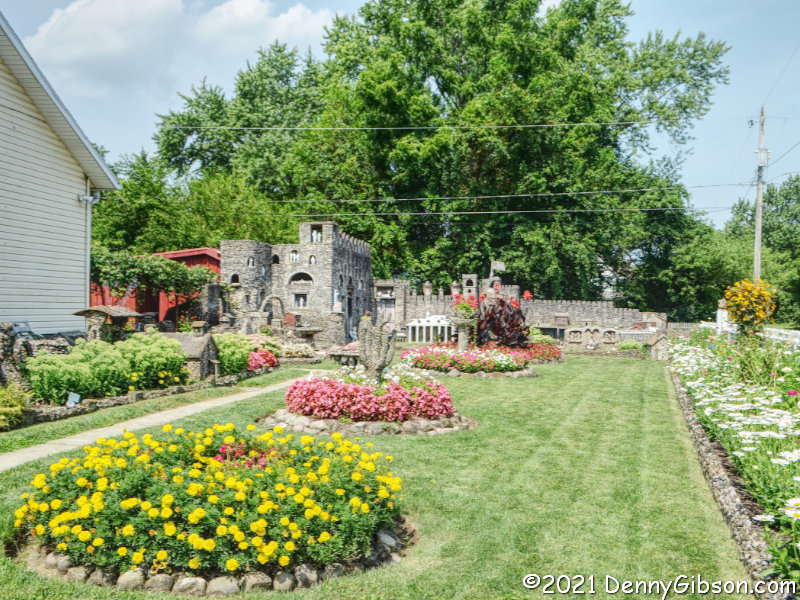 The structures in the garden look every bit as good as they did immediately following Kohler’s restoration and the landscaping looks even better. Those “friends” are doing a wonderful job. In addition to maintaining and enhancing the garden, they have produced an excellent “Guide Book and Map” that is available near the entrance. There is also a “Kids Tour” booklet available on site plus it and both pre- and post-tour worksheets can be downloaded. Admission is free but there is a donation box and this is certainly a place that deserves your support if you are able.
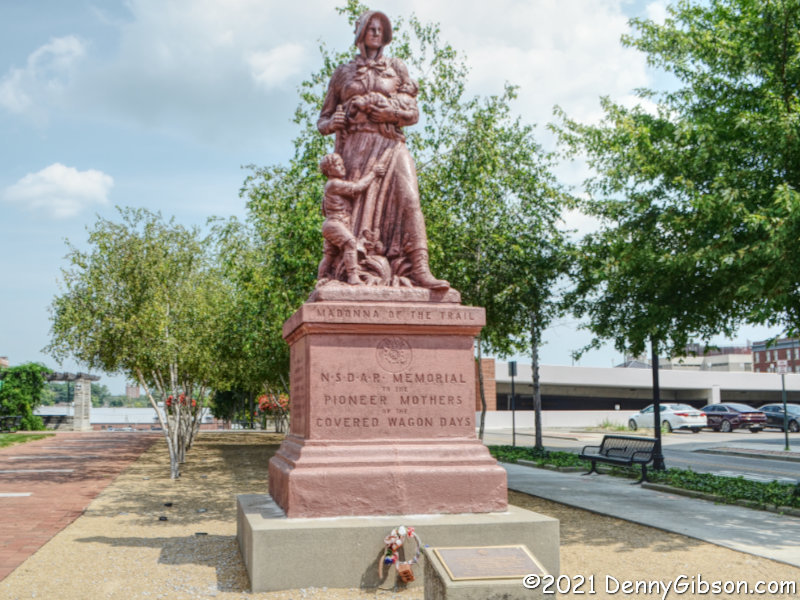
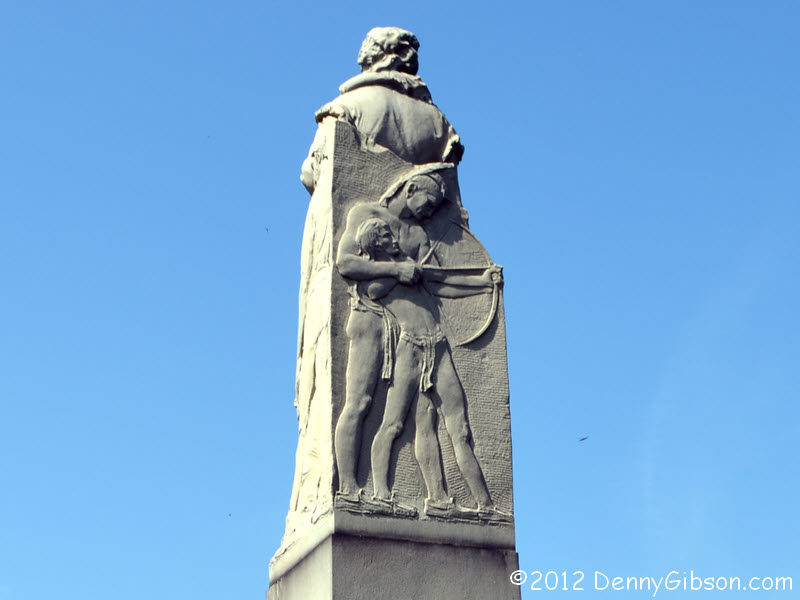
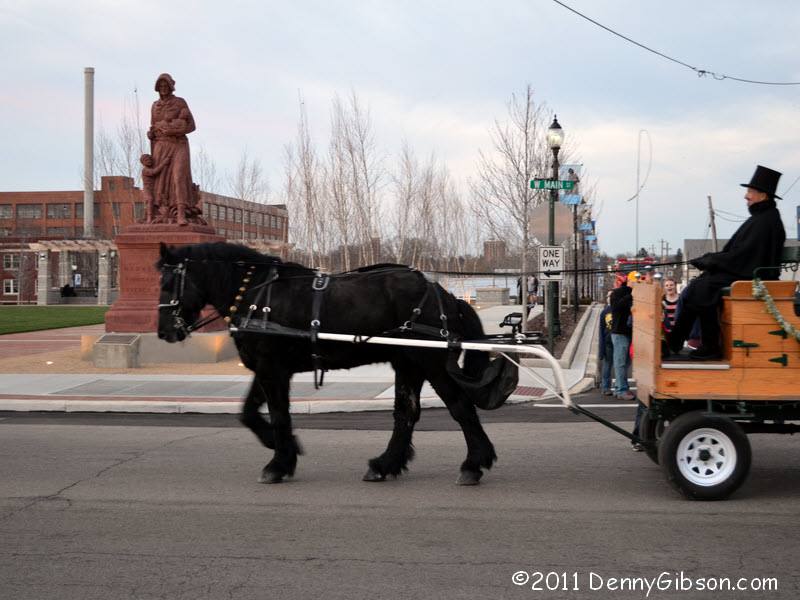
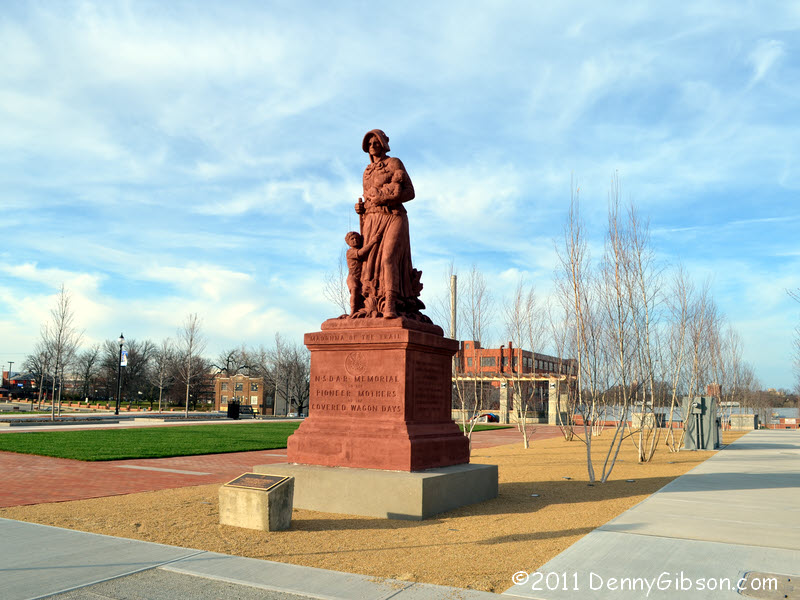
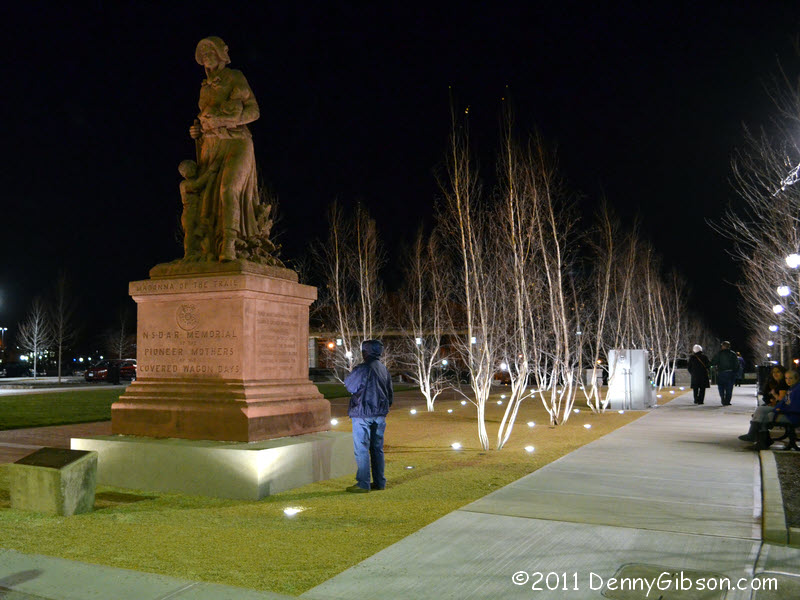
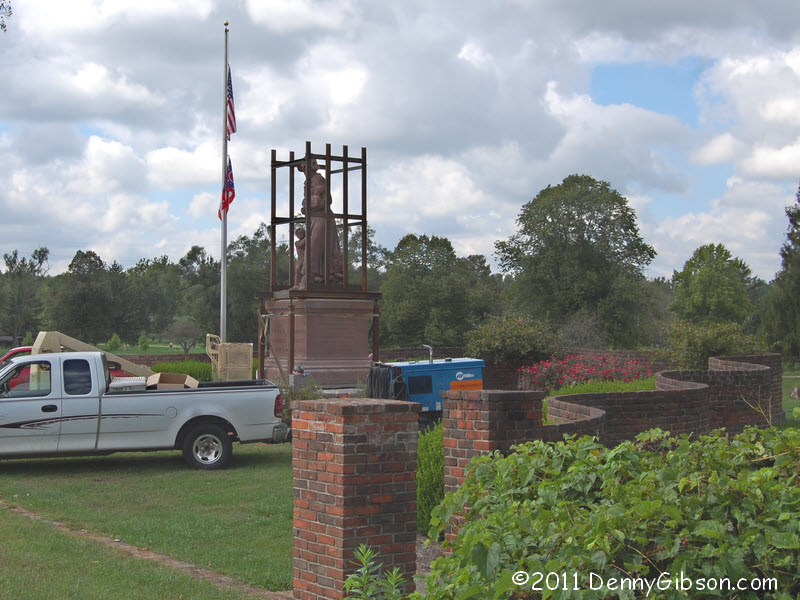
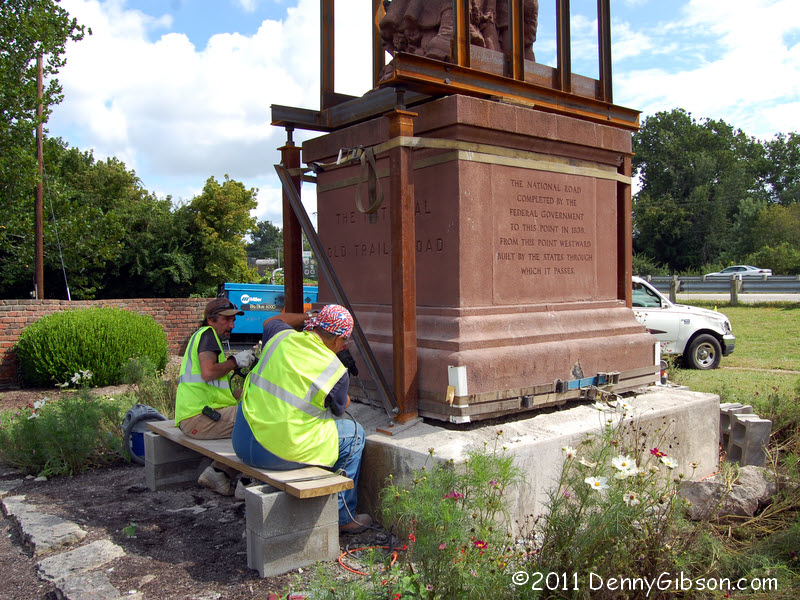
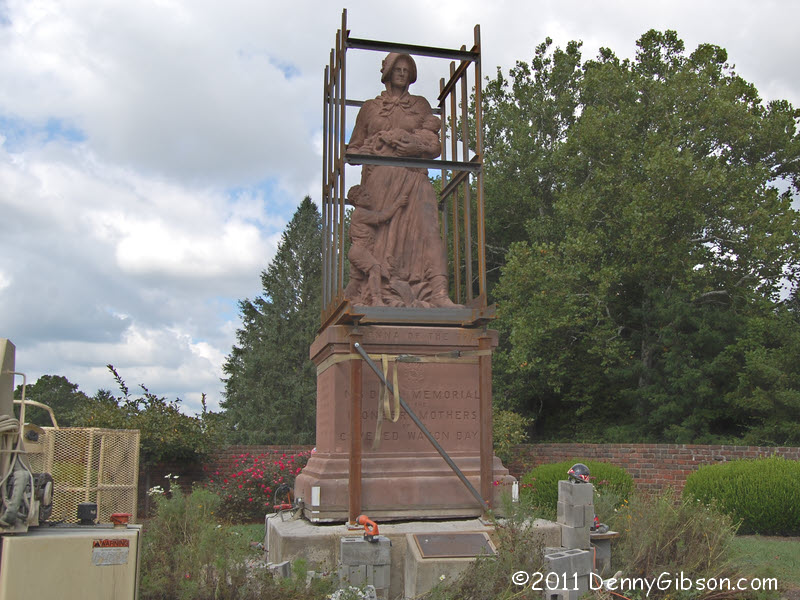 You may have noticed that the Hartman Rock Garden was not the primary reason I was in Springfield in either 2005 or 2011. Since I included some then-and-now garden pictures, I’m including a then-and-now of my reason for the 2011 trip. The 2005 trip was to see a temporary exhibit so there is no then-and-now. The 2011 outing was to check on the progress of the Ohio Madonna of the Trail monument’s move from its location at Snyder Park to downtown Springfield. In 2011 she was still at Snyder Park but was all packed and ready to go. I’ve since photographed her several times in her new home and today I did it again.