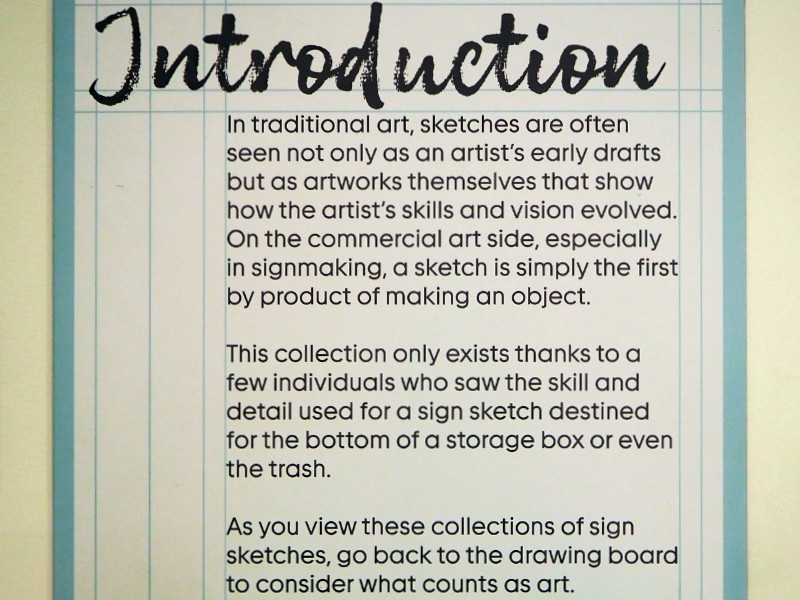
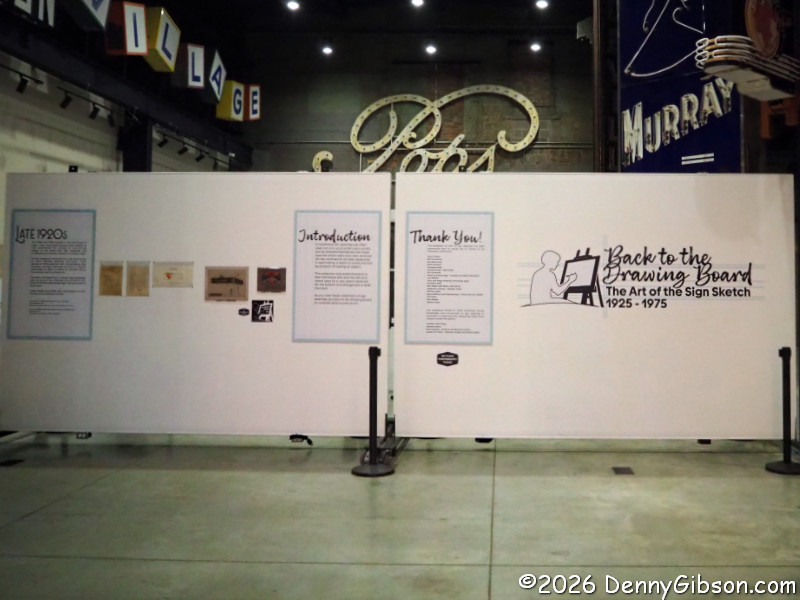
 Sketches are big in Cincinnati right now. Last month, I looked over some sketches by Rembrandt at the Taft. Yesterday, I looked over some sketches by various sign designers at the American Sign Museum. I missed Thursday’s opening reception for the ASM’s Back to the Drawing Board: The Art of the Sign Sketch 1925-1975 exhibit, but made it to Saturday’s tour by ASM founder Tod Swormstedt. The introduction placard speaks of the difference in how commercial art and fine art are perceived and invites folks to “consider what counts as art”. Early in the tour, Tod shared his oft-repeated observation that “The difference between fine art and commercial art is the number of zeros in the price.”
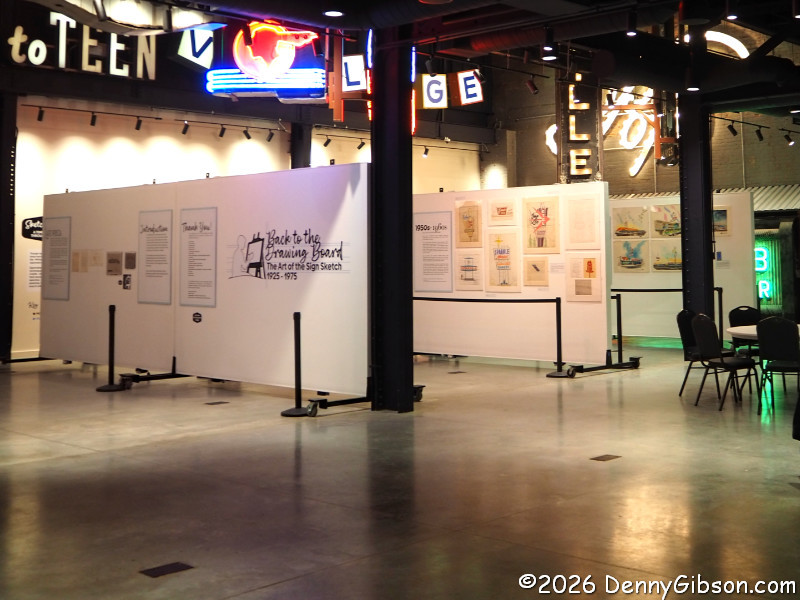 The exhibit is placed in what I believe is the museum’s largest event space. It marks the first use of the large movable panels made for just this purpose. The area’s walls have been used for previous exhibits, but the wheeled panels provide significantly more wall space while allowing the area to be easily cleared for dining, and dancing, and such.
 Most of the sketches are placed in chronological sequence on the movable panels. A fixed wall displays a timeline of significant world events, along with examples of sign designs from the identified periods. marked times. Some of the noted events, such as the 1965 Highway Beautification Act, had a sizable direct effect on advertising and signs.
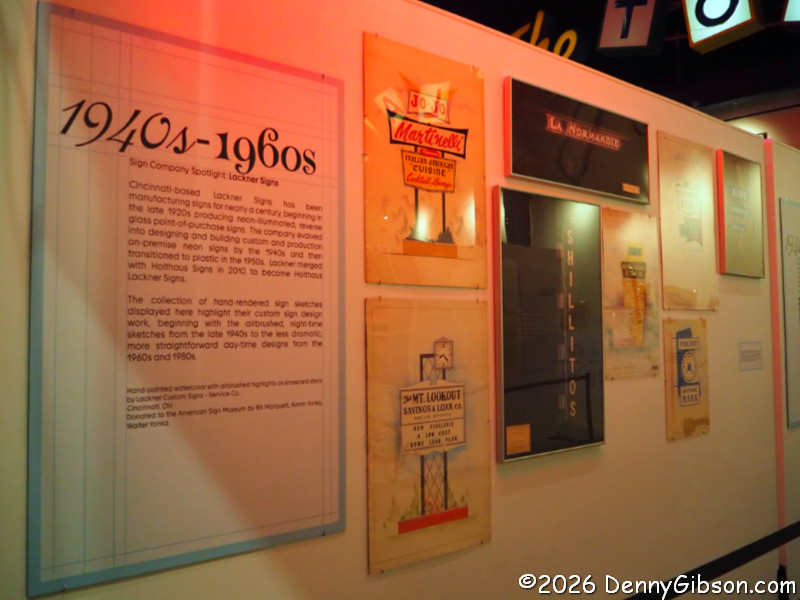
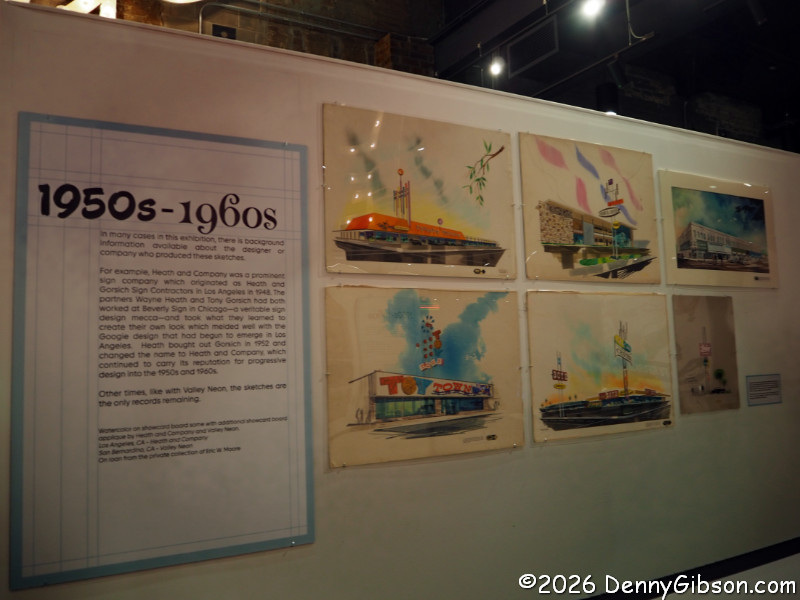 Among the things Tod pointed out as he led us through the exhibit was the start of using black backgrounds to better illustrate the impact of lighted signs and the increasing use of backgrounds and buildings rather than just the sign by itself.
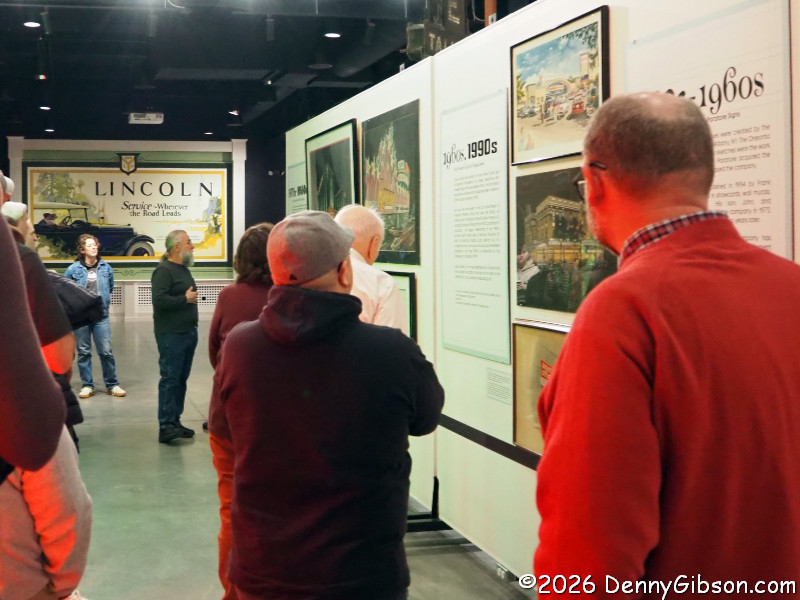 Items on the exhibit’s last panel, as well as many of the previous items, can hardly be described as sketches. Some of the older sketches had truly been salvaged from trash cans and dumpsters. Some items in this photo were borrowed from collections displayed in homes and on office walls. The exhibit provides some real insight into the design and marketing of signs, but doesn’t help at all — Tod’s “zeros” comment notwithstanding — in distinguishing fine art and commercial art.
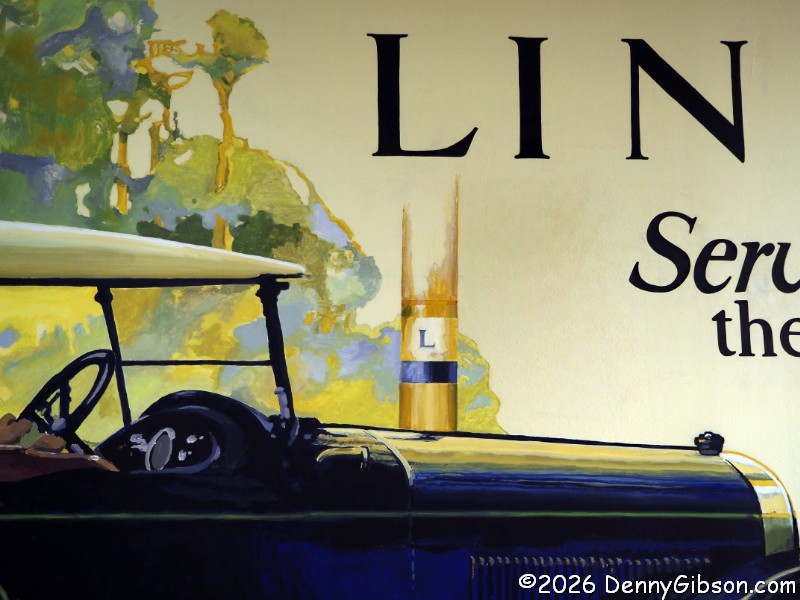 This picture has nothing at all to do with the Back to the Drawing Board exhibit. It is a detail from the billboard reproduction advertising the Lincoln automobile in the background of the last exhibit-related photo that might interest my named-auto-trail-loving friends.